
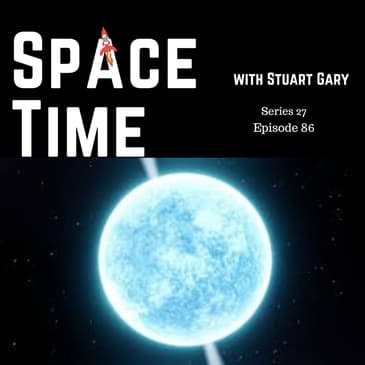


- First, new sophisticated computer models are giving scientists a glimpse inside neutron stars, revealing that these exotic objects might be made of nuclear pasta. Discover how atomic nuclei, protons, and neutrons deform into plates and strings under extreme conditions, providing new insights into the densest objects in the universe, second only to black holes.
- - Next, the crew aboard the International Space Station captures stunning images of red sprites, ephemeral and little-understood bolts of lightning occurring high above thunderstorm clouds. Learn about the fascinating phenomenon of sprites, blue jets, and elves, and how these transient luminous events are studied from space.
- - Finally, we delve into the observations of Hurricane Beryl, the first Atlantic hurricane of the 2024 season. With deadly winds and extreme storm surges, Beryl's rapid intensification was monitored by NASA and NOAA satellites, providing crucial data for early warnings and highlighting the ongoing impact of climate change on tropical cyclones.
- Follow our cosmic conversations on X @stuartgary, Instagram, YouTube, and Facebook. Join us as we unravel the mysteries of the universe, one episode at a time.
- Sponsor Offer:This episode is proudly supported by NordVPN. Secure your digital journey across the cosmos with a VPN service you can trust. Find your stellar security solution at https://www.bitesz.com/nordvpn.
- Listen to SpaceTime on your favourite podcast app including Apple Podcasts, Spotify, YouTube Music, or wherever you get your podcasts.Support SpaceTime:
- Become a supporter of SpaceTime: https://www.bitesz.com/show/spacetime/support/www.bitesz.com
- For an extra special deal from our sponsor, Malwarebytes - cyber security for everyone, visit www.bitesz.com/malwarebytes. For a very limited time, you get 50% off. You really don't want to miss this. It's one we use and swear by. It just works!
[00:00:00] This is SpaceTime Series 27 Episode 86 for broadcast on the 17th of July 2024. Coming up on SpaceTime, scientists predict a new phase of matter inside neutron stars, red sprites captured from space, and observing hurricanes from orbit. All that and more coming up on SpaceTime. Welcome to SpaceTime with Stuart Gary.
[00:00:26] New sophisticated computer models may be giving scientists a glimpse inside a neutron star, one of the most exotic and extreme objects in the universe. Their findings reported in the journal Physical Review Letters suggest that these mysterious
[00:00:55] stellar objects are actually made of a sort of nuclear pasta, atomic nuclei, protons and neutrons deformed into plates and strings similar to lasagna or spaghetti. Neutron star matter is packed up to five times as densely as in an atomic nucleus.
[00:01:12] In fact, the only objects in the universe more dense are black holes. When a star like our sun reaches the end of its life on the main sequence, having fused most of its hydrogen into helium in its core,
[00:01:24] the balancing act between gravity crushing the star down towards the center and nuclear energy pushing outwards ends, and gravity wins, causing the star to collapse inwards. Now all this added mass crashing down onto the stellar core causes a dramatic increase in
[00:01:39] pressure and temperature. Eventually it gets extreme enough to trigger a helium flash, making it hot enough for the core to begin fusing helium into carbon and oxygen. At the same time, a hydrogen shell then begins to burn surrounding the core,
[00:01:54] and the star's outer layers begin to expand due to this increased heat. And because it's now further away from the core, the outer envelope of the star begins to cool. This combination of expansion and cooling turns the star into what astronomers call a red giant.
[00:02:11] Eventually stars like our sun will fuse most of their core helium into carbon and oxygen. But they're simply not big enough, they don't have enough mass to fuse carbon and oxygen into heavier elements, and so once again the fusion process ends.
[00:02:26] The outer gaseous envelopes then detach and float away from the star as planetary nebula, leaving the stellar core exposed as a white dwarf, a white hot object which will slowly cool over eons. However stars which are far more massive than our sun face a very different fate. Because
[00:02:45] they're so massive with much higher core temperatures and pressures, they fuse hydrogen into helium through a different process, and they can then go on to progressively fuse heavier and heavier elements, carbon, nitrogen, oxygen, neon, magnesium, silicon, sulfur, nickel and eventually
[00:03:00] iron. However no matter how massive a star is, it's never massive enough to fuse iron into heavier elements. And so once again that balancing act between gravity crushing a star down towards its center and nuclear energy pushing outwards reaches a final conclusion, and once again
[00:03:18] gravity's the winner, causing the entire mass of the star to suddenly collapse inwards, a process eventually producing a massive explosion called a core collapse supernova, a blast so bright it can briefly outshine an entire galaxy. For stellar cores greater than approximately 1.44 solar masses,
[00:03:37] a figure known as the Chandra Sekar limit, this immense gravitational collapse breaks through what's known as electron degeneracy. That's the quantum mechanical effect arising from the Pauli exclusion principle that prevents more than one fermion, such as an electron for example,
[00:03:51] from being in the same minimum energy level quantum state at the same time. Instead it allows further collapse, crushing the negatively charged electrons into the positively charged protons in the nucleus of each atom and together forming neutrons, hence the star's name. The result is an
[00:04:10] object that consists of some 95% neutrons with only about 5% protons. The strong nuclear force then plays a role preventing further collapse into neutron degeneracy. That's thought to occur at around 2.3 solar masses producing a stellar mass black hole. Although only a dozen or so kilometers
[00:04:28] across, neutron stars are the densest objects in the known universe other than black holes. In fact just a sugar cube size of neutron star material would weigh more than 100 million tons. So understanding neutron stars and what they're made of is one of the great goals of astronomy.
[00:04:48] Now researchers have adopted a new theoretical approach to investigate the state of nuclear matter in the inner crust region of a neutron star. They've shown that both neutrons and protons can drip out of atomic nuclei and then stabilize as a sort of nuclear pasta. The study's lead author
[00:05:07] from the Technology University of Darmstadt says matter in the outer crust of a neutron star isn't as dense as the interior and there are still atomic nuclei present. But as the density increases,
[00:05:17] an excess of neutrons develop in the atomic nuclei. He says neutrons can then drip out of the nuclei resulting in atomic nuclei floating in a kind of neutron source. Schwenk and colleagues wanted
[00:05:29] to know if protons can also drip out of the nuclei. So using new advanced computer simulations they were able to calculate the state of neutron matter under the conditions in the neutron star's crust, determining its energy as a function of the proton fraction. They also included the pairwise
[00:05:46] interactions between particles in their calculations as well as those between three nucleons. All this allowed them to demonstrate that protons in the inner crust of a neutron star can also drip out of nuclei. This phase consisting of protons coexists with the neutrons. Schwenk says they're
[00:06:03] also able to show that these phases do favour the phenomena of nuclear pasta. And thanks to the protons sprinkled into the source, the nucleons can better exist in spaghetti or lasagna shapes.
[00:06:15] The new findings enabled the team to refine the image of nuclear matter in the crust of neutron stars. Schwenk says the better science can describe neutron stars, the better it can compare with astrophysical observations. The new findings improve the theoretical understanding of neutron stars
[00:06:32] and contributes to gaining new insights into these cosmic mysteries from astrophysical measurements. This is Space Time. Still to come, images of red sprites captured by the crew of the International Space Station and using satellites to study hurricanes from space. All that and more still
[00:06:51] to come on Space Time. The crew aboard the International Space Station have captured images of ephemeral little understood bolts of lightning known as red sprites. Sprites are large-scale electrical discharges that occur in the mesosphere high above thunderstorm clouds,
[00:07:22] giving rise to a varied range of visual shapes flickering in night skies. They appear as luminous red and orange transient vertical column-like plasma flashes often occurring in clusters above the troposphere usually at altitudes ranging from 50 to 90 kilometres. Sporadic visual reports
[00:07:40] of sprites go all the way back to at least 1886, but they were only first photographed in 1989. Apart from occasional reports of strange lights seen above thunderstorms by airline pilots, almost nothing was known about them until scientists studying thunderstorms began
[00:07:58] serendipitously detecting them in photographs. Since those first 1989 images, they've been photographed from the ground, from aircraft and from space and have become the subject of intense investigations. Sprites are thought to be large-scale electrical discharges triggered by
[00:08:14] rare positive lightning that originates in the anvil head of thunderstorm clouds where positive charges tend to accumulate. Positive lightning is about five times as powerful and hot as the regular type of lightning we normally see, which is technically known as negative lightning. Positive
[00:08:30] lightning also lasts about 10 times longer, allowing it to strike many kilometres away from a storm. In fact, it's this property which led to the expression a bolt out of the blue. Unlike negative
[00:08:41] lightning which occurs either inside a thunderstorm cloud or from the base of the cloud to the ground, positive lightning tends to travel outside the cloud, striking the ground directly. Sprites are part of a little understood group of mysterious lightning phenomenon known as sprites, blue jets
[00:08:56] and elves, all of which are seen to occur above thunderstorm clouds. Sprites are sometimes preceded by red halo emissions lighting up a millisecond before the sprite about 70 kilometres above the initiating lightning strike. Sprite halos look like 50 kilometre wide discs and are thought
[00:09:14] to be produced by a weaker version of the same ionisation process which produces the sprites. Then there are elves, flattened expanding reddish glows of plasma some 400 kilometres wide but lasting just a millisecond. They've been seen at altitudes of 100 kilometres above thunderstorms.
[00:09:31] They're thought to be caused by the excitation of nitrogen molecules due to collisions between electrons energised by lightning from the underlying thunderstorm. Another close relative of sprites are known as blue jets. They're very bright narrow cones of plasma seen above
[00:09:46] thunderstorms usually at altitudes of 40 to 50 kilometres. Their colour is believed to be caused by blue and near ultraviolet emissions from neutral and ionised molecular nitrogen. Blue jets are also thought to be associated with strong hail activity during thunderstorms. Another closely related
[00:10:04] phenomenon called blue starters thought to be shorter brighter versions of blue jets only reaching 20 kilometres in height. Then there are gigantic jets thought to be a bigger version of blue jets capable of reaching 80 kilometres in height and they may be the tallest lightning on earth.
[00:10:19] Transient luminous events including red sprites are captured by space station crew using wide focal lengths during earth time lapses. Instruments mounted outside the space station like the Atmosphere Space Interactions Monitor ASIM can capture a range of data on these events
[00:10:36] researchers down on the ground using cameras photometers as well as x-ray and gamma ray detectors. It's a fascinating but little understood part of our planet's atmosphere. This is space time. Still to come observing hurricanes from space and later in the science
[00:10:53] report claims ozempic and other similar drugs may reduce the risk of obesity related cancers. All that and more still to come on Space Time. Millions of people are still counting the costs after Hurricane Beryl, the first Atlantic hurricane for the 2024 season, pounded deadly 240
[00:11:26] kilometre per hour winds and extreme storm surge into towns and villages as it barrelled through the Caribbean and Mexico's Yucatan Peninsula before finally making landfall in eastern Texas. Beryl first formed as a tropical depression in the central tropical Atlantic in the closing days of
[00:11:42] June. As it grew into a powerful tropical cyclone it was under constant surveillance by the weather satellites of NASA and the National Oceanographic and Atmospheric Administration NOAA. Images captured by the visible infrared imaging radiometer suite aboard the NOAA 21 spacecraft
[00:12:00] showed the eye of the storm was rapidly intensifying 490 kilometres southeast of Barbados quickly becoming a category 5 hurricane. And that was somewhat of a surprise. See the National Hurricane Center noted that atmospheric conditions in late June are typically unfavorable for storm
[00:12:16] intensification in that part of the Atlantic. In fact very few storms have ever formed this far east so early in the season. After tearing through the Caribbean and Mexico, Hurricane Beryl swept ashore over the Gulf Coast of Texas bringing high gusts and heavy rains to the Houston area.
[00:12:35] As it moved north towards Houston, Beryl dumped some 20 centimetres of rain over the metro area causing intense flooding along roads, lots of downed trees and massive power outages. As well as the NOAA 21 satellite, NASA and NOAA were also able to keep a constant eye on the storm
[00:12:51] providing early warning thanks to the advanced baseline imager array aboard the GOES-16 geostationary operational environmental satellite which observes the earth from orbits some 36,000 kilometres above the equator. The explosive strengthening of Beryl was fueled in
[00:13:07] part by warm ocean temperatures. The hurricane was finally downgraded to a tropical storm a few hours after making landfall but hazardous winds and flooding rains continued to batter the East Texas region for many hours leaving more than 2.6 million people without power. Oceanographer Josh Willis
[00:13:24] from NASA's Jet Propulsion Laboratory in Pasadena, California says despite the waning El Nino, temperatures at sea surface and deeper in the ocean are still above the average in many places. Across the northern hemisphere, ocean temperatures for January through to April averaged 1.18 degrees
[00:13:41] Celsius above normal. Willis says we're seeing more frequent and more intense tropical storms in some parts of the world and they're starting earlier. So that begs the question, does it all mean that tropical cyclones will be getting even stronger as global warming increases?
[00:13:58] This report from NASA TV. Are hurricanes getting stronger? When you say are hurricanes getting stronger in the sense of are they gonna be category six, the answer in that case will be no. Because of physics, hurricanes do not reach more than a category five. However we do see
[00:14:19] more and more hurricanes in the Atlantic every season get into category three, category four, or category five compared to seasons 40 years ago. NASA does have a huge part in the studies of hurricanes and it starts mainly with the development of all these different instruments that we put on
[00:14:40] satellites and we put in orbit. As scientists we are always looking at the reasons why there's this possibility that more and more tropical cyclones are becoming category three or more in every hurricane season. There is a large influence from climate change. The warmer the
[00:14:58] water, the stronger and the more energy this system is gonna have and it's gonna just increase in intensity. So are hurricanes getting stronger? The answer to that will be yes. We are seeing more
[00:15:12] and more tropical cyclones become category three, four, and five. So in reality yes we're seeing that change every season in the last several years. And in that report from NASA TV we heard from NASA atmospheric scientist Maria Kudera Fuentes. And this is Space Time. And time now to
[00:15:49] take another brief look at some of the other stories making use in science this week with the Science Report. A new study claims that a Zempig and other drugs like it collectively known as glucagon-like peptide 1 receptor agonists may reduce the risk of obesity related cancers more
[00:16:05] than other types of weight loss and diabetes medications. A report in the Journal of the American Medical Association investigated health record data on more than a million people with type 2 diabetes who are either taking insulins, metformin or a glucogen-like peptide 1 receptor
[00:16:22] agonist. The authors found that those taking a Zempig or other similar medications had a lower risk of being diagnosed with 10 of 13 cancers normally associated with obesity over 15 years. These include esophageal, colorectal, endometrial, gallbladder, kidney, liver, ovarian and pancreatic
[00:16:42] cancers as well as meningioma the most common type of brain tumor and multiple myeloma a type of blood cancer. Paleontologists have described the most complete dinosaur discovered in Britain in the last 100 years. The 125 million year old iguanodon fossils were originally found
[00:16:59] in the cliffs of Compton Bay on the Isle of Wight back in 2013. Comptonitis chasii is based on 149 bones including a pubic hip bone the size of a dinner plate and a lower jaw with a straight bottom
[00:17:12] edge making that quite different to most other iguanodon species which tend to have jaws curved downwards. It also had other unique features in its skull teeth and body parts. The herbivore would have been about the same size as a large North American bison and would have weighed around 900
[00:17:28] kilograms. A report in the Journal of Systematic Paleontology speculates that the large pubic hip bone which is placed at the base of the abdomen would have been so large for muscle attachments which might mean its mode of locomotion was different to other iguanodons or it could have
[00:17:44] been to support its stomach contents more effectively or even to have been involved in how the animal breathes. A new study warns that people sharing false political information on social media may have mental issues associated with schizotypy a type of traits that include
[00:18:01] paranoia suspicion and disrupted thinking patterns. Researchers performed four studies on close to 2,000 people including surveys on people's tendencies and motivations around sharing false information. They looked at how they felt about a series of true or false political headlines and whether
[00:18:17] they would consider sharing those stories. The findings reported in the Journal PLOS One showed that across all the studies the authors found evidence that people with higher levels of schizotypy were more likely to share false information both accidentally and deliberately.
[00:18:32] Well if you're into gadgets you already know it's been a huge week for technology releases. Apple have finally released their new Vision Pro in Australia but at six thousand Aussie dollars a pop many are asking whether this still fairly bulky first generation augmented reality headset
[00:18:49] is really worth the price and while that debate rages among the Apple faithful Samsung have just released their latest technology including the new AI equipped Galaxy Flip 6 and Fold 6 cell phones and the new Galaxy Ring a titanium band weighing less than three grams that connects to a Samsung
[00:19:08] smartphone to record your health data. With all the details we're joined by technology editor Alex Zaharov-Wright from TechAdvice.life. The big thing that people are talking about is the Galaxy Ring
[00:19:19] so this is similar to the Oura Ring that came out on Kickstarter but slimmer it's like it has a whole stack of health sensors so sleep tracking whether you're snoring tracking your heart rate at night
[00:19:29] it's tracking your heart rate normally during the day with this live heart rate tracking and it can give you motivational messages there's a whole bunch of little things that you can even do
[00:19:37] gestures where you can double pinch to answer the phone or silence an alarm with these gestures and you can also find your ring through the the finally Galaxy Ring app on Samsung smartphone
[00:19:47] so you won't easily lose it and there's a little charging case that you can slot the ring into and it'll charge it up. And the flip phones a new flip phone I love the flip phone when I had my
[00:19:56] original Motorola flip phone back in the olden days I used to love that and I used always used to think you know Kirk to Enterprise I'm sure everyone did and yeah story there is once I was
[00:20:05] at a bar that no longer exists the drag queen who was doing a show looked at me and said oh we have a young version of William Shatner sitting there which I actually took as a compliment. Well there you go yeah look I still
[00:20:16] have one of those Motorola Razer phones not the StarTAC the 90s. That's what I'm talking about yeah the Razer I've still got mine sitting in the drawer. Yeah yeah no it's great fun to look at it I mean
[00:20:25] Motorola does actually have a flip phone that is a strong contender to Samsung's but Samsung's Galaxy Flip 6 and their Fold 6 that's their sixth generation devices they are squarer, sleek you know the crease
[00:20:38] on the screen is the shallowest yet it's not completely flat but it felt very very slim. I was at a Samsung event that I had for journalists before the big reveal in Paris last week and so we got the
[00:20:49] chance to see these and see the improvements to AI, the translator mode with the larger device the fold where you can be talking you can have the outer screen showing what's being said it's
[00:20:58] really sort of cool to see that but also Samsung has its ability to translate phone calls into different languages and translation yeah yeah these days the latency is no longer a huge problem
[00:21:11] that was when you're talking and you have to wait quite a few seconds for it so they've definitely improved that but you've got the new Galaxy Ultra watch so that's very similar to the Apple watch
[00:21:21] you've got the watch 7 the round screen so a nice selection of new products from Samsung time to come a couple of months before Apple launches its iPhone 16 and Samsung has made sure there's plenty of AI features and functions across the entire ecosystem so they're really putting
[00:21:36] gauntlet down against Apple in September and we do expect to see or it's been announced that we're going to have Google Pixel 9 and 9 Pro in August so the companies are lining up their ducks
[00:21:46] in a row to try and beat Apple's concept of the runways. That's Alex Sahara-Vroid from TechAdvice.life and that's the show for now. Space Time is available every Monday, Wednesday and Friday through Apple Podcasts iTunes, Stitcher, Google Podcasts, Pocker Casts, Spotify, Acast, Amazon Music,
[00:22:21] Bytes.com, SoundCloud, YouTube, your favorite podcast download provider and from Spacetime with Stuart Gary.com. Space Time is also broadcast through the National Science Foundation on Science Zone Radio and on both iHeart Radio and TuneIn Radio and you can help to support our show
[00:22:40] by visiting the Space Time store for a range of promotional merchandising goodies or by becoming a Space Time Patron which gives you access to triple episode commercial free versions of the show
[00:22:50] as well as lots of bonus audio content which doesn't go to air, access to our exclusive Facebook group and other rewards. Just go to spacetimewithstuartgary.com for full details and if you
[00:23:02] want more Space Time please check out our blog where you'll find all the stuff we couldn't fit in the show as well as heaps of images, news stories, loads of videos and things on the web I
[00:23:12] find interesting or amusing. Just go to spacetimewithstuartgary.tumblr.com. That's all one word and that's Tumblr without the e. You can also follow us through at Stuart Gary on Twitter at Spacetime with Stuart Gary on Instagram through our Space Time YouTube channel and on Facebook
[00:23:31] just go to facebook.com forward slash spacetimewithstuartgary. You've been listening to Space Time with Stuart Gary this has been another quality podcast production from Bytes.com